





 Why Trust Us?
ToProxyLab has been testing proxy services since 2025. We pay for most plans ourselves, and when a provider gives us test traffic we say so in the review — free traffic buys a place in the testing queue, nothing else. Every provider goes through the same speed, uptime and fraud-score checks, and we publish the real numbers, including the bad ones. A rating cannot be bought. Learn who we are and how we review proxies.
Why Trust Us?
ToProxyLab has been testing proxy services since 2025. We pay for most plans ourselves, and when a provider gives us test traffic we say so in the review — free traffic buys a place in the testing queue, nothing else. Every provider goes through the same speed, uptime and fraud-score checks, and we publish the real numbers, including the bad ones. A rating cannot be bought. Learn who we are and how we review proxies.
The proxy market right now is a minefield. Some services just resell each other, others die the day after you pay, and the rest cost an arm and a leg. In all this chaos, IPRoyal positions itself as that sweet spot – good enough for enterprise work but won’t bankrupt the solo affiliate marketer.
I put these proxies through the wringer myself. Spoiler alert: this ain’t a perfect service. There’s some issues with pool cleanliness, but there’s also features that make me willing to put up with a few headaches.
Below you’ll find my personal experience buying US mobile proxies for account farming, testing their support team on New Year’s Eve, and the raw numbers from their technical documentation.
Introduction and Quick Verdict: What’s the Deal?
IPRoyal has grown from a basic proxy seller into a full-blown ecosystem. Their big selling point in 2026 is ethical IP sourcing. They claim all their IPs come through their own app called Pawns.app. Basically, regular folks (peers) sell their bandwidth for a few bucks. For us, that means we get genuine residential IP addresses, not datacenter garbage dressed up to look like home WiFi.
Who’s gonna love it:
- Affiliate marketers: Works great for Facebook, Google Ads and TikTok (especially if you’re not swimming in cash).
- Sneakerheads and crypto folks: Anyone who needs unique fingerprints for drops.
- Web scrapers: If you’re scraping Amazon or other e-commerce sites and sick of captchas.
- Truly unlimited bandwidth. Pay a flat daily rate and download as much as you want;
- Support is a beast. They solved my problem in 20 minutes on New Year’s Day;
- Pricing. Cheaper than renting ports from Bright Data or Oxylabs.
- Dirty pools. I got IPs that were already in spam databases;
- Detection issues. iphey.com flags some of their mobile proxies;
- Speed. Can be unstable, not ready for Enterprise-level SLA.
Technical Specs
Let’s cut to the chase. No fluff about “innovative technologies” here.
Proxy Types
- Residential Proxies: The crown jewel of the service. Real user devices. Perfect for bypassing anti-fraud systems that hate datacenters.
- Mobile Proxies (4G/5G): The good stuff for account farming. Social networks trust these the most. Available as dedicated or rotating.
- Datacenter Proxies: Cheap, fast, and basic. But any decent website will spot them instantly.
- Sneaker Proxies: A niche product for copping limited edition kicks.
Protocols and Geo-Targeting
Thank goodness they support both HTTP(S) and SOCKS5. That’s standard stuff these days. If you need UDP, check with them about specific packages, but mobile proxies work like a charm.
The geo-targeting goes deep. You can pick not just a country but drill down to city level or even specific ISPs (ASN). This is crucial when you’re running campaigns for a particular US state.
IP Rotation
Pretty flexible options here.
- Sticky Sessions: The IP stays put for up to 24 hours (or until the user turns off their phone). You need this so you don’t get logged out mid-session.
- Rotating on Request: Every new request gets a new IP. A must-have for web scraping.
Hands-On Test: My Story (USA, New Year’s Eve and Reddit)
I wasn’t about to trust the marketing hype, so I bought US mobile proxies. The task was simple but tedious: registering a bunch of Reddit and Gmail accounts.
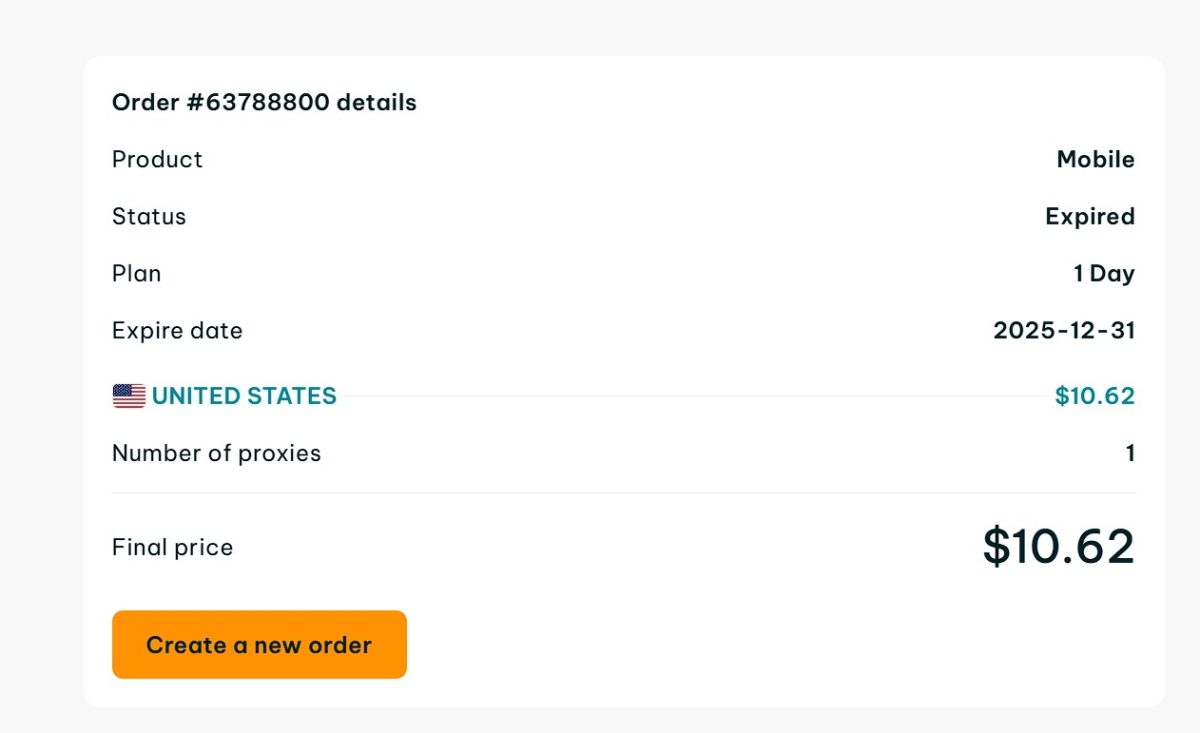
At first, everything was smooth sailing. My antidetect browser (I was using Dolphin{anty}) picked up the proxy, accounts were getting registered, no bans in sight. Speed was good enough to load videos, let alone solve captchas.
The December 31st Incident
Then it happened. Classic timing. December 31st. Everyone’s making party snacks and my proxies just died. Totally stopped connecting. Honestly? I thought: “Well, that’s it. New Year’s Eve, support’s probably partying, work’s dead until January 3rd.”
With zero expectations, I opened a support ticket. It was evening on the 31st.
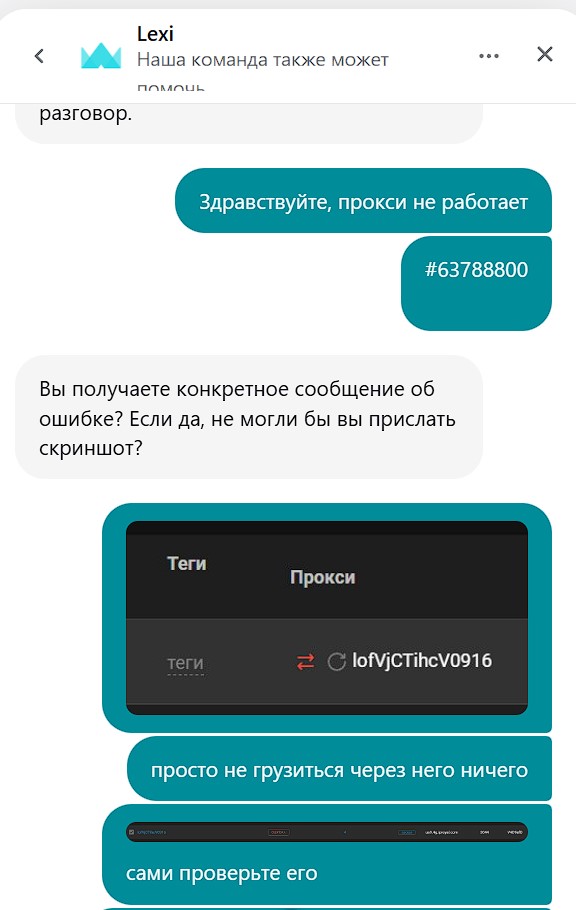
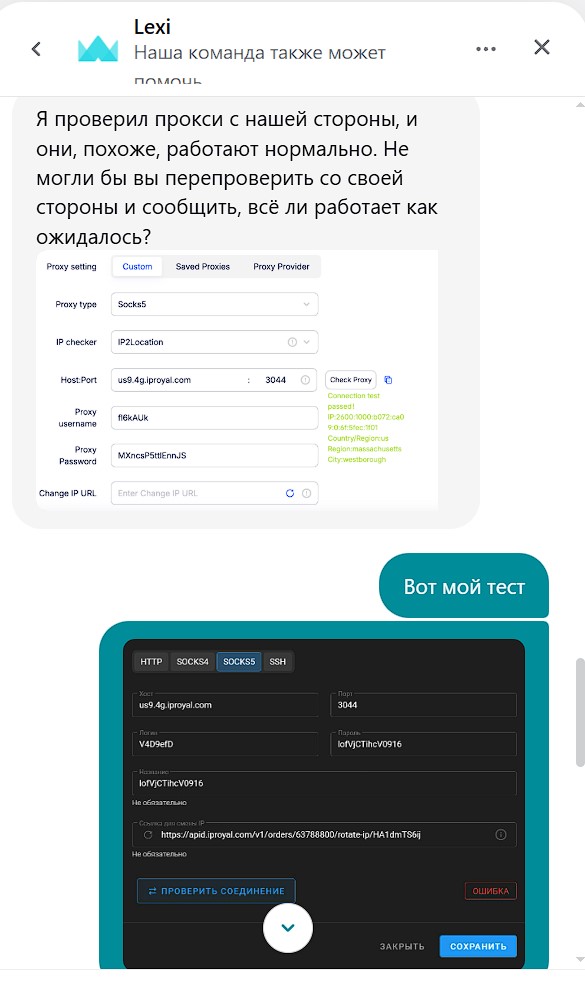
About 20 minutes later, I got a response: “Sorry about that, here’s your new credentials (login/password), give it a try.”
Plugged in the new info and it fired right up.
That’s a huge plus. Support really does work 24/7, even when the rest of the world is celebrating.
The Fraud Score Check
Now here’s where things got a bit dicey. I decided to run the new IPs through some checkers.
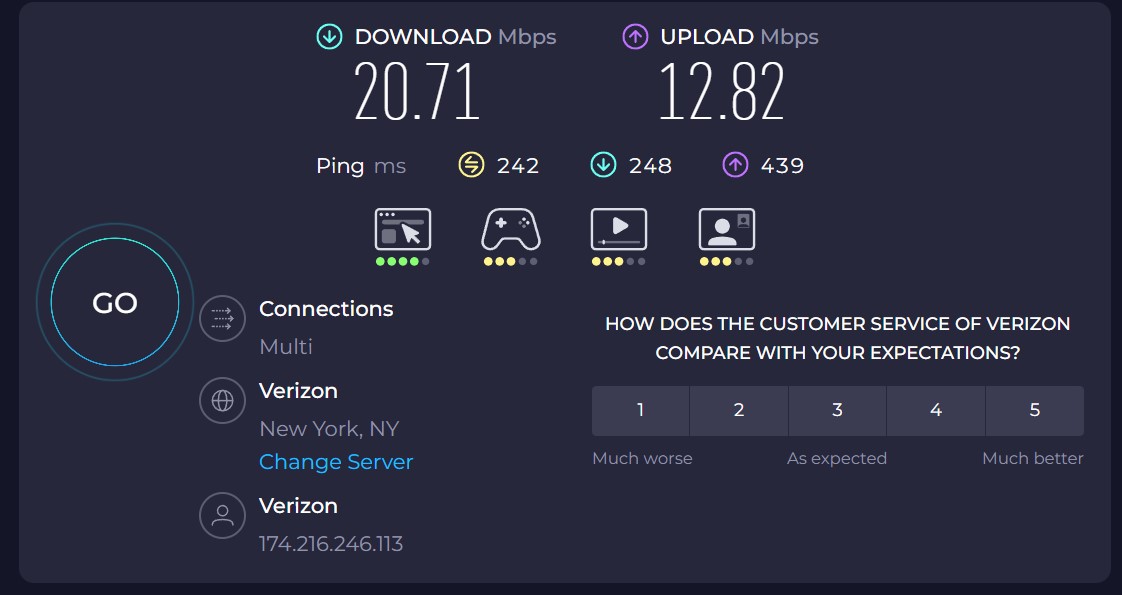
- Speed: Speedtest showed around 15-20 Mbps. For mobile proxies that’s pretty normal and more than enough.
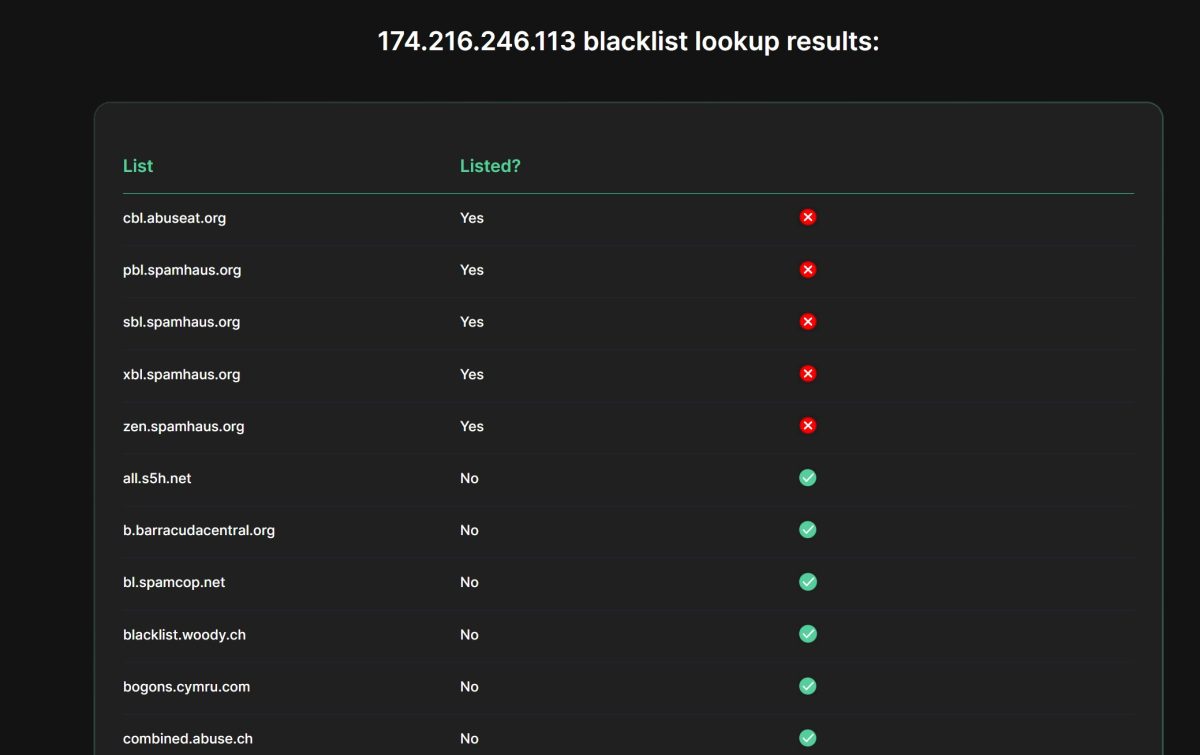
- IP Cleanliness: Here’s the kicker. One of the IPs I got was already on blacklists (Spamhaus). Looks like someone before me was spamming hard from that address.
- Detection: I checked iphey.com. Results were concerning. The service could tell I was using a proxy.
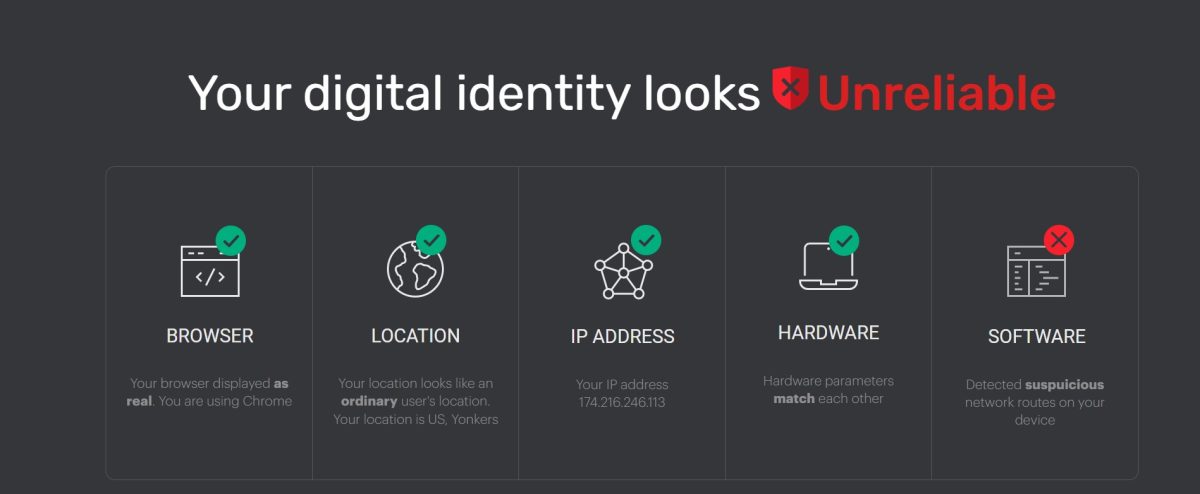
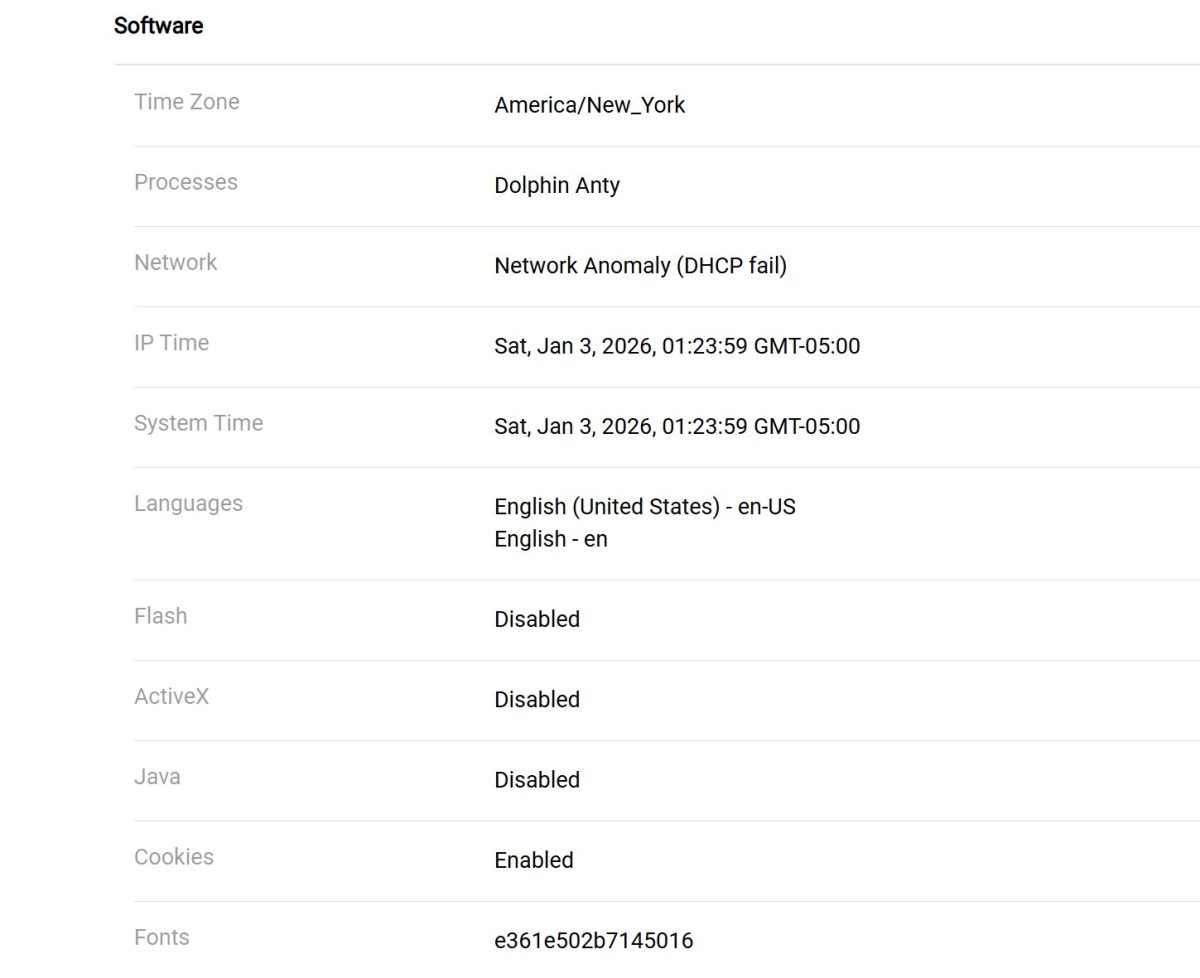
Important: To be fair, the issue might’ve been partly my antidetect browser settings. But the fact remains: the pool isn’t squeaky clean. For legitimate uses it’ll work fine, but for anything sensitive with picky platforms, it’s risky.
User Experience and Dashboard
IPRoyal’s dashboard is pretty minimalist. You don’t need to be a tech wizard to buy a package.
- Proxy List Generator: Pick your country, rotation type, format (user:pass or ip:auth), and you get your list. Export to .txt whenever you want.
- API: Documentation exists and it’s actually usable. Got it working with ZennoPoster without any hassle.
- Tools: There’s a free Chrome/Firefox extension (handy for testing geo) and their own proxy checker.
Pricing: Competitor Killer?
This is where IPRoyal plays a different card, especially when we’re talking mobile proxies.
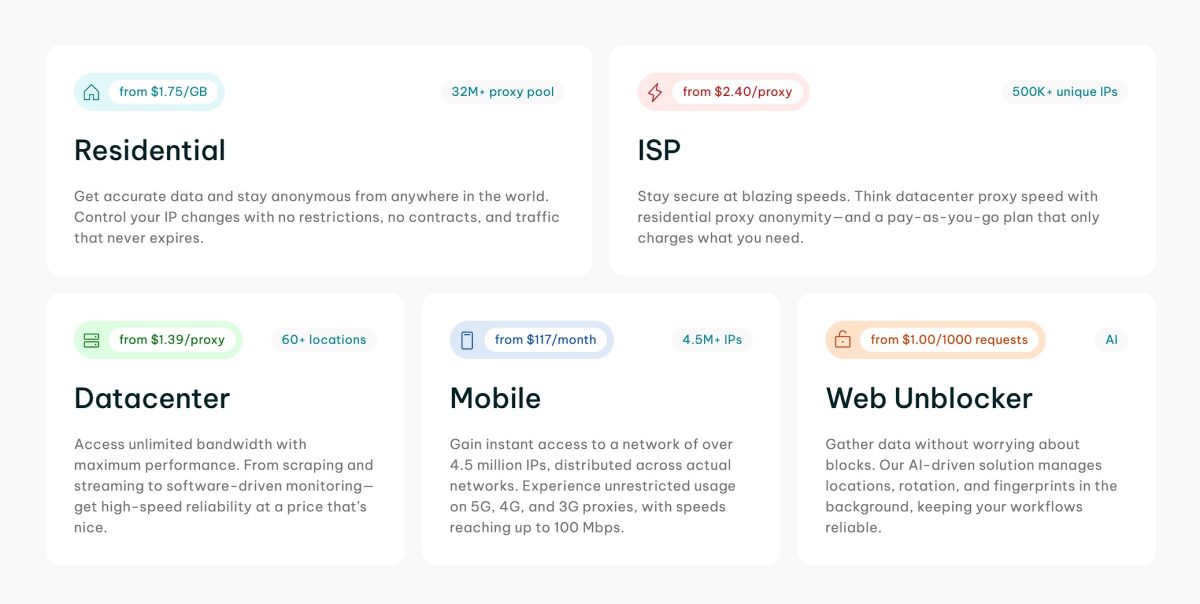
Unlike residential IPs where everyone’s used to paying per gigabyte (Pay-As-You-Go), IPRoyal mobile proxies are sold on a flat-rate time-based model (daily or monthly).
You pay a fixed amount per day and get completely unlimited bandwidth. No gigabyte counters. For folks scraping heavy content or keeping sessions active around the clock, this works out way cheaper than paying $7 per gig at other providers.
Pricing Model Comparison (prices fluctuate, but here’s the gist):
| Feature | IPRoyal (Mobile) | Smartproxy (Decodo) | Bright Data | Oxylabs | Proxy-Cheap |
| Pricing Model | Flat Rate (daily/monthly) | Usually per GB | Usually per GB | Usually per GB | Packages / Flat |
| Bandwidth | Unlimited | Use it or lose it | Use it or lose it | Use it or lose it | Unlimited (usually) |
| Validity Period | Duration of rental (1 day+) | 12 months (via Wallet) | Usually 30 days | Usually 30 days | 30 days |
| Total IP Pool Size | ~32 million IPs | ~55 million IPs | ~72 million IPs | ~100+ million IPs | ~10 million IPs |
| Geographic Coverage | 195 countries | 195 countries | 195 countries | 195 countries | 127 countries |
| IP Sourcing Method | Pawns.app (real users) | SDK in apps + partners | SDK + Direct contracts | SDK + Tier-1 partners | Aggregated from various sources |
| Speed / Success Rate | Average (~99.4%) | High (~99.6%+) | Excellent (~99.9%) | Excellent (~99.9%) | Below average |
| Minimum Entry | Very low (from 1 day) | None (wallet top-up) | Yes (for some plans) | High for best prices | Low |
| Who should choose over IPRoyal? | Those who need speed more than bandwidth savings. | Large businesses needing advanced tools (Web Unlocker). | Enterprise clients with huge budgets and strict SLA requirements. | Those on tight budgets who don’t care about stability. |
If you need to push a ton of traffic in a short time (say, scraping heavy media files), IPRoyal’s flat rate pricing is unbeatable. You’re not sweating every megabyte.
Detailed Competitor Breakdown
1. IPRoyal vs Smartproxy (now branded as Decodo)
This is the most important matchup.
- Where Smartproxy wins: Technically, Smartproxy (Decodo) beats IPRoyal on response speed and pool cleanliness. Their infrastructure rotates bad proxies faster, so you see fewer connection timeout errors.
- Where IPRoyal wins: The unlimited flat rate model. If your software runs 24/7 constantly pulling data, you’d go broke buying gigabytes on Smartproxy. With IPRoyal, you pay for the day and forget about it.
- Bottom line: If you’re scraping heavy data (video, images), go with IPRoyal (unlimited bandwidth). If speed matters more and you’re scraping lightweight text, pick Smartproxy.
2. IPRoyal vs Bright Data / Oxylabs
Classic David and Goliath situation.
- Where the giants win: Bright Data has tools IPRoyal simply doesn’t offer (like ready-made datasets, scraping IDE, browser-level captcha unlockers). Oxylabs has the biggest IP pool in the world, which matters if you need to scrape millions of pages daily without getting blocked.
- Where IPRoyal wins: No red tape. To start with Bright Data, you often have to go through strict KYC (video call with a manager), especially for mobile proxy access. IPRoyal lets you buy a day’s access with no questions asked.
- Bottom line: Bright Data/Oxylabs are for corporations. IPRoyal is for small businesses and in-house teams.
3. IPRoyal vs Proxy-Cheap
Budget segment showdown.
- Where Proxy-Cheap wins: Sometimes their prices dip even lower, but it’s hit or miss.
- Where IPRoyal wins: Quality and ethics. IPRoyal is transparent about where they get their IPs (Pawns.app). Proxy-Cheap is a classic reseller whose pool quality varies wildly month to month. IPRoyal’s dashboard and API are leagues ahead.
- Bottom line: IPRoyal is worth the extra cash for stability and a better interface.
Real Downsides (What’s Annoying)
I promised to keep it real. Here’s what might get on your nerves:
- Pool cleanliness issues. That’s the flip side of accessibility. Since the service is popular and affordable, a lot of sketchy traffic runs through it. Your chances of hitting a used-up IP are higher than with premium closed-door services.
- Mobile proxy lag. When IPs rotate, there’s sometimes a 10-30 second delay. If your software runs multi-threaded and is sensitive to timeouts, this will drive you nuts.
- Antidetect detection. Like I mentioned, iphey and pixelscan sometimes throw flags. You end up cycling through IPs until you find a clean one. That eats up time.
What Do Reviews Say?
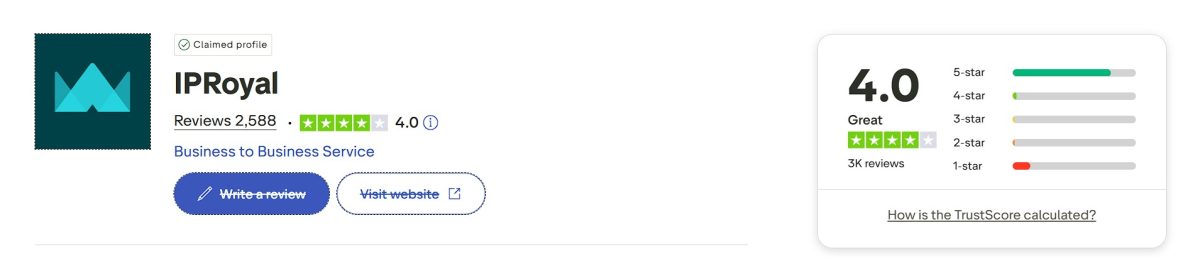
I did my homework and checked Trustpilot and industry forums (BlackHatWorld). The picture’s interesting. The service has a solid rating (around 4.0/5), but the devil’s in the details.
What people love:
- Value for money: Users are stoked about buying “non-expiring” residential gigabytes without worrying about them vanishing at month’s end.
- Customer support: I’m not the only one who noticed fast responses. Many mention getting help with complex scraping setups right in the chat.
- Low barrier to entry: Beginners appreciate being able to buy 1 GB or 1 day of proxies without dropping hundreds upfront.
What people hate:
- Slow speeds in exotic locations: Complaints about dial-up speeds in countries like Vietnam or Brazil.
- Refund hassles: If you buy proxies, use them for a couple hours, then realize they don’t work for your specific site (like Ticketmaster), getting your money back is tough. They say the service was delivered.
- Burned IPs: Just like my experience, users sometimes complain about fresh IPs already being on Google’s blacklist.
Final Verdict
IPRoyal in 2026 is a solid choice for startups, solo affiliate marketers, and anyone who doesn’t want to burn cash on expiring traffic.
If you’re working with Facebook, Reddit or Google at moderate volumes, just grab it. The flat daily rate will save you a ton on bandwidth. But be ready to check your proxies for fraud scores before putting them to work. Support that comes through on New Year’s Eve? That deserves serious respect. You don’t see that kind of service much these days.
But if you’re a large enterprise needing 99.9% SLA and pristine IPs, look at Bright Data or Oxylabs and get that wallet ready. Keep IPRoyal as a reliable backup.
My recommendation: Start with their minimum package (1 day). Test it for your specific use case. At their prices, it’s basically pocket change.
195 countries with city-level targeting
from $10/day
Real user IPs sourced through Pawns.app